

Moving day becomes easier when the crew can work without stopping to solve preventable problems. A few decisions made ahead of time can protect your belongings, keep everyone safe, and make the loading process more efficient.
To understand how to prepare for movers, focus on four priorities: finish or arrange packing, label what is going where, set aside documents and other essentials, and confirm access details with the crew. Keep children, pets, and personally handled valuables out of the work area, too.
Whether you are moving across northern Delaware or farther away, preparation is shared work. Your mover can explain services and special handling, while you make the home ready for a clear, well-protected path from the first room to the truck.
How to prepare for movers before packing day
Start preparing as soon as your moving date is reasonably certain. An early plan gives you time to sort belongings, confirm services, and handle decisions that should not wait until the crew arrives. Delaware Moving & Storage recommends organized preparation so your move can stay focused and carefully monitored from start to finish.
Use an eight-week moving checklist to divide the work into manageable steps. Begin by walking through each room and deciding what will move, what you will donate, and what you will discard. Decluttering before packing reduces the number of items that need boxes, labels, loading, and placement at your new home. It also helps you make clearer choices about storage during a transition.
Decide who will handle the packing
Choose between packing everything yourself, using partial packing help, or requesting full service. If you are packing independently, have belongings packed and labeled before the moving truck arrives. Use sturdy boxes, appropriate cushioning, and accurate labels. Place heavier items at the bottom, and identify each box by room and general contents. These details help the crew place boxes where you need them.
If time, mobility, or the size of your move makes packing difficult, ask about professional packing services. Delaware Moving & Storage offers full or partial packing with professional materials. You can decide which rooms or belongings need assistance while keeping control of the rest of the preparation.
Create a clearly marked area for items traveling with you instead of going on the truck. Include medications, important documents, chargers, toiletries, a change of clothes, and other first-night essentials. Keep valuable or irreplaceable personal items with you, and ask your mover which items require a separate transportation plan. Do not assume a general online list applies to your move.
Before packing begins, clean and dry items that will be loaded. Empty, clean, thaw when necessary, and dry appliances. A short room-by-room review can also reveal special handling needs that you should discuss with the moving team early.
A physical or virtual survey allows the estimate to reflect your belongings and requested services. That preparation supports clearer communication before loading day, whether you are moving locally in Delaware or coordinating a longer relocation.
What should you pack, label, and set aside?
When packing service is not part of your move, finish packing and labeling before the crew arrives. Use sturdy boxes, cushioning, and a size that matches the item. Put heavier belongings lower in each box, then seal it securely. This gives the crew a clear, workable inventory and helps protect your possessions during loading.
Label every box on more than one side. Include the destination room and a short description of the contents. Such as “kitchen – glassware” or “main bedroom – linens.” Room labels help movers place boxes where you want them. Content labels also make the first round of unpacking much easier. If a box contains fragile items, mark that clearly without relying on a label alone.
| Box label | What to include |
|---|---|
| Destination | Room or area where the box belongs |
| Contents | Short description of the items inside |
| Priority | First-night, daily-use, or storage status |
| Special care | Fragile, upright, or other handling note |
For especially valuable or delicate belongings, create a simple record before the move. Note the item type, brand, serial number, estimated value, and distinctive features when those details matter. Photograph the item and any existing damage shortly before packing. Photos of electronics before cords are disconnected can also make reconnection easier. A quick photo of box contents before sealing can help you remember what belongs inside.
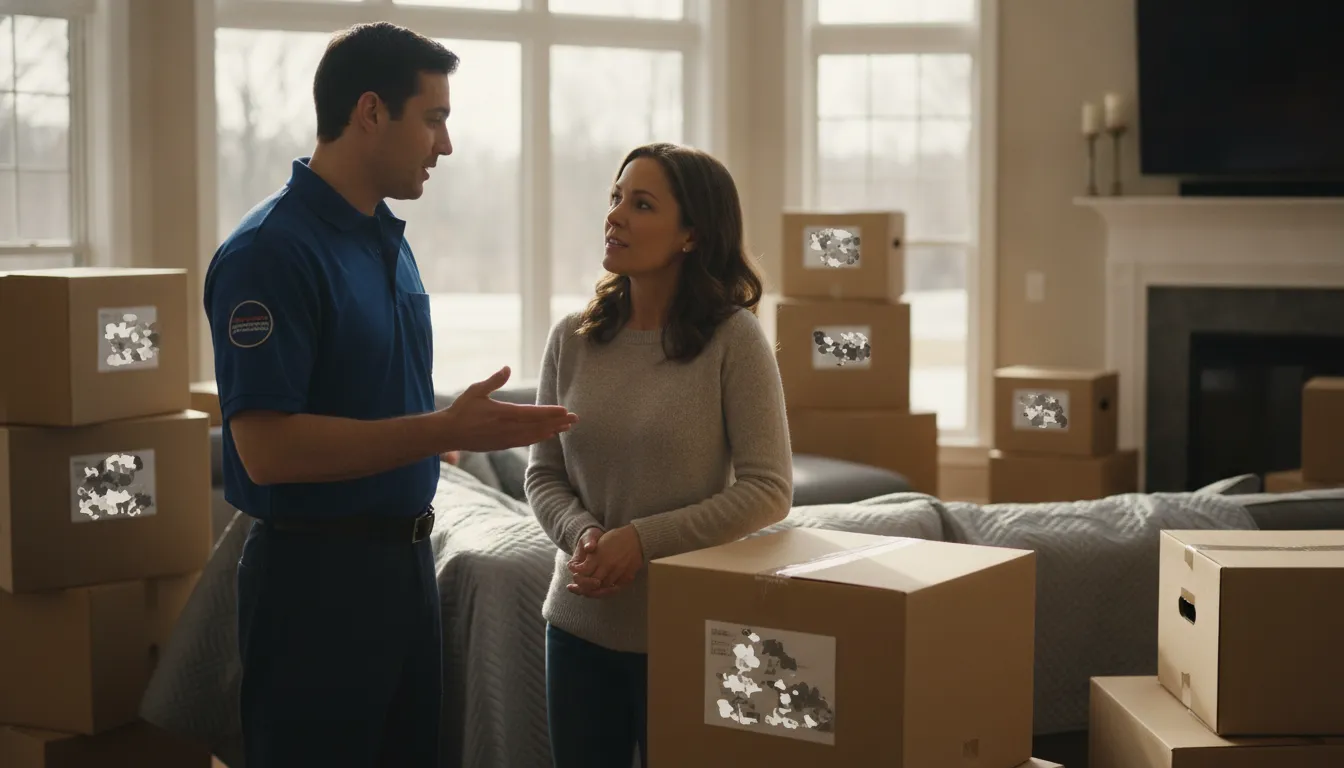
Make a first-night essentials box
Pack one clearly marked essentials box for the first night, and keep it separate from the shipment if practical. Include medications, basic toiletries, chargers, important documents, a change of clothes, and towels. Add anything your household needs to function before the rest of the boxes are open. Keep this box easy to identify rather than burying it under larger cartons.
Medications, passports, financial records, keys, jewelry, cash, and irreplaceable personal items should stay with you. High-value items and sentimental collections are commonly better handled personally. If you want protection for items loaded by the mover, review valuation protection options and ask what each option covers. Valuation protection is not identical to homeowners insurance, so clarify the terms before moving day.
Set aside a no-pack zone
Choose one room, closet, or clearly marked area for belongings traveling with you. Place the essentials box, documents, medications, valuables, and personal bags there. A closed room or visible “do not load” sign can reduce confusion while the crew works. Tell the crew leader about the area before loading begins.
Do not assume every household item can travel on the truck. Ask your mover for its current list of non-transportable items and make a safe plan for anything excluded. Some materials may require disposal, gifting, or another approved arrangement. Confirm the answer directly with your mover instead of relying on a general internet list.
Finish appliances and battery-powered items
Clean and dry belongings before they are loaded. Empty, clean, thaw when needed, and thoroughly dry appliances. Moisture trapped inside an appliance or container can damage nearby items during transport. Remove batteries from devices that will travel on the truck. For fuel-powered tools, ask your mover how they must be prepared before relocation.
If the packing feels too large to manage, Delaware Moving & Storage offers professional packing services. You can ask about full or partial packing, depending on which rooms or belongings need help.
Use this system to separate what the crew will load from what you will carry. Then confirm special handling needs and non-transportable items with your moving company before arrival.
How can you make your home safe and accessible for movers?
Give the crew a clear, practical route from the truck to the rooms before moving day. Good access protects your belongings, reduces delays, and helps the team work safely. Walk through both the pickup and delivery locations with the move in mind.
Plan parking and building access early
Choose the closest legal parking area that can accommodate a moving truck. For an apartment, condominium, or street-side move, ask the property manager about truck access, loading zones, elevator reservations, and building procedures. Confirm the reservation details with your moving coordinator.
Delaware neighborhoods can vary from wide suburban driveways to narrow older streets and compact city parking. Share those details before the crew arrives. Tell the mover about parking rules, street restrictions, elevator limits, stairs, narrow doorways, and any time restrictions. A short video or a few clear photos can help explain difficult access points.
If your building requires a certificate of insurance, loading dock booking, or advance notice, ask about it early. Requirements differ by property. Do not assume a curbside space will remain available when the truck arrives.
Measure large items and clear the route
Measure large furniture, appliances, doorways, hallways, stairwells, and tight turns. Compare those measurements before moving day. This can reveal a problem while there is still time to plan a safer approach.
Remove shoes, boxes, rugs, cords, toys, planters, and other obstacles from corridors and entryways. Open doors fully where possible. Keep the path from the parking area to the entrance clear. If a hallway or stairway has a particularly tight turn, point it out to the crew lead before loading begins.
Set aside a safe area for children and pets away from open doors and active carrying routes. Moving day involves heavy items, frequent foot traffic, and changing surfaces. A trusted caregiver or quiet, contained room can reduce the risk of an escape or an injury.
Protect floors and communicate special conditions
Wet Delaware weather can make entryways slippery and can track dirt inside. Keep towels available for unexpected moisture, and discuss protection needs before work starts. Floor coverings, old sheets, blankets, or sturdy cardboard can help protect floors and improve traction.
Delaware Moving & Storage crews use door and floor protection, furniture pads, trucks, dollies, and hand trucks as part of careful moving operations. Still, tell the crew about newly finished floors, delicate surfaces, low ceilings, fragile railings, or other concerns. The team can then plan the route and handling approach with those conditions in mind.
Request a free in-home estimate to discuss access details before moving day.
For help coordinating a local move, explore local moving services. Sharing accurate access information helps the coordinator prepare the right plan instead of relying on a blind estimate.
How should you prepare children, pets, and special items?
Moving day works better when children and pets are separated from the active work area. Open doors, moving equipment, and heavy items can create safety risks, especially when several people are entering and leaving the home. Arrange trusted care for young children, or keep them in a quiet room away from the loading path. A family member, friend, or childcare provider can give them attention while you coordinate with the crew.
Pets also need a secure plan. Keep dogs, cats, and other animals in a contained area away from doors, stairs, and the truck. Trusted boarding or in-home care may be the least stressful option. Make sure the person responsible for your pet knows the schedule, feeding needs, medications, and contact information. Do not assume a closed bedroom is safe unless it remains separate from the crew’s route.
Tell the moving company about special items early
Walk through your home before moving day and identify anything that needs special planning. This may include fragile antiques, oversized furniture, artwork, glass pieces, exercise equipment, musical instruments, or items with unusual shapes. Tell the moving coordinator what each item is, where it is located, and any access concern that could affect handling.
Early notice gives the crew time to consider appropriate materials and handling methods. Hills Properties recommends communicating special handling needs before moving day so movers can prepare specialized packing materials and provide extra care. Read the supporting guidance at Hills Properties.
Do not wait until the crew is carrying an item through the doorway. Mention narrow halls, staircases, delicate finishes, tight turns, or items that need disassembly. If a large or fragile piece has a particular placement requirement, explain that before loading begins. Clear communication helps the crew plan the move instead of discovering a problem mid-task.
Decide what stays with you
Set aside documents, medications, jewelry, cash, irreplaceable keepsakes, and other personal essentials you want to carry yourself. Place them in a clearly marked room or area that is not part of the loading plan. Tell the crew which space is off limits, then keep the area closed when possible.
Ask the mover which items they will not transport and make a plan for anything that requires disposal, gifting, or separate transport. Never place an uncertain item in a box and hope it can be loaded. Confirm the answer with your moving coordinator before moving day.
For items that will travel with the crew, ask about available valuation protection options. Valuation protection is not the same as homeowners insurance, so review the available terms and select the option that fits your shipment and concerns.
Request a free moving estimate and discuss special handling needs before moving day.
What should you confirm with the moving crew before arrival?
A short confirmation call can prevent confusion before the truck reaches your home. Review the plan with the moving coordinator or crew lead several days before arrival. This gives everyone one clear version of the moving-day plan.
Confirm the schedule and the right contact
Verify the arrival window, pickup address, destination address, and the best phone number for moving day. Ask who will contact you if traffic, weather, or another delay changes the schedule.
Choose one responsible adult to remain available throughout loading. The Federal Motor Carrier Safety Administration recommends staying present, answering questions, and remaining until the crew finishes. See the FMCSA moving checklist for this guidance.
Review the inventory and services
Walk through the inventory with the coordinator. Confirm which rooms, furniture, boxes, appliances, and specialty items are included. Mention anything added or removed since the original planning conversation.
Read the written estimate before moving day. It should describe the charges and services the mover will perform, according to FMCSA guidance. Ask questions about packing, storage, furniture placement, valuation protection, and any other service listed in your agreement.
If your move crosses state lines, confirm the details for the line-haul portion, delivery communication, and any selected services. Delaware Moving & Storage provides long-distance and interstate moving through its broader relocation network.
Share access details early
Tell the crew about stairs, narrow doorways, tight hallways, elevators, restricted parking, loading zones, or building time limits. Confirm whether you need a parking permit, elevator reservation, or property-management approval.
Describe the easiest path from the truck to the entrance. Clear walkways before arrival and identify surfaces that need protection. The company uses furniture pads and door and floor protection materials, but access details still help the crew plan safely.
Discuss special handling and the survey
Point out fragile, oversized, unusually heavy, or difficult-to-access items before moving day. Early notice gives the crew time to prepare appropriate materials and handling practices.
Ask whether every item and service reflects the physical or virtual survey. A survey supports an accurate, detailed estimate by giving the mover a clearer view of the shipment and access conditions. Learn more about the moving survey and estimate process.
Finally, ask what you should carry personally and what the crew will load. Set aside documents, medications, jewelry, cash, and irreplaceable valuables. Confirm any item you are unsure about directly with the mover rather than making assumptions.
What final checks should you complete on moving day?
A calm final review protects your time, your records, and your confidence before the truck leaves. Keep your moving documents, phone, keys, and essentials with you throughout the day.
- Stay present and available. A responsible adult should remain at the home while the crew works. Answer questions, give clear directions, and point out items that need special handling. FMCSA recommends staying until the crew finishes. See the full guide to what to expect on moving day for a helpful timeline.
- Confirm the loading plan. Review the rooms, boxes, furniture, and special items included in the shipment. Keep personal documents, medications, jewelry, cash, and irreplaceable valuables in your no-pack area or with you. If an item has a special handling need, discuss it with the crew lead before loading begins.
- Watch the home protection process. Confirm that walkways remain clear and that doors, floors, and high-traffic areas receive appropriate protection. Delaware Moving & Storage crews use furniture pads, door protection, floor protection, trucks, dollies, and hand trucks as part of careful moving operations. Mention any areas that require extra attention before work begins.
- Complete the pickup walk-through. Walk through every room, closet, cabinet, attic, garage, and storage area after loading. Check behind doors and inside appliances. FMCSA advises taking one final look before the moving van leaves to confirm nothing remains behind. Also check for loose debris or visible damage that needs attention.
- Review the inventory and documents. Compare the loaded items with your inventory or shipment paperwork. Make sure the documents reflect the services and charges discussed in writing. Keep copies or photographs of signed documents, inventory pages, and any notes you make during the move. Ask questions before signing when something is unclear.
- Prepare the delivery plan. Before delivery, decide where major furniture and priority boxes should go. Clear the entry path and identify rooms using your labels or a simple placement plan. At delivery, inspect boxes and items as they arrive. Note damaged or missing items on the inventory before signing documents, as FMCSA advises.
- Record concerns promptly. Photograph any condition issue and write a concise description beside the relevant item or box. Keep your notes with the moving paperwork. If you need clarification, contact the moving coordinator or crew lead while the details are fresh. A clear record makes follow-up more organized.
These checks do not require you to manage every lifting task. Your role is to stay informed, provide directions, protect essential documents, and confirm the home and shipment are accounted for.
Frequently Asked Questions
What should I do before movers arrive?
Clear walkways, confirm the arrival window, reserve parking or an elevator if needed, and mark the rooms where boxes and furniture should go. Keep one responsible adult available to answer questions and give directions during the move. FMCSA recommends staying present until the crew finishes.
When should I start preparing for movers?
Start as soon as your moving date is set. Early preparation gives you time to sort items, donate or dispose of things you will not move. Pack room by room, and arrange help with anything that needs special handling. If you did not purchase packing service, your belongings should be packed and labeled before the truck arrives, as noted by Move.org.
What should I not let movers pack?
Set aside medications, important documents, cash, jewelry, irreplaceable keepsakes, and other high-value personal items you prefer to carry yourself. Do not assume that every household product or fuel-powered item can travel in the truck. Ask your mover for its current non-transportable-items guidance and make a plan before moving day.
How should I prepare pets and children for moving day?
Arrange for children and pets to stay with a trusted caregiver or in a secure, separate area away from loading paths, open doors, and moving equipment. Keep their food, medications, identification, and comfort items with you. Tell the crew about any access or safety concern before work begins.
Do movers pack for you?
Many moving companies offer full or partial packing, but packing is typically a service you select in advance rather than an automatic part of every move. Confirm exactly what is included, which rooms or items the crew will pack, and what you must prepare yourself. Delaware Moving & Storage offers professional packing services using appropriate materials.
Ready to plan your move with confidence?
A detailed estimate can help you understand the work involved and prepare your home, schedule, and questions before moving day. Delaware Moving & Storage can review your move through an in-home survey and help you take the next practical step.