
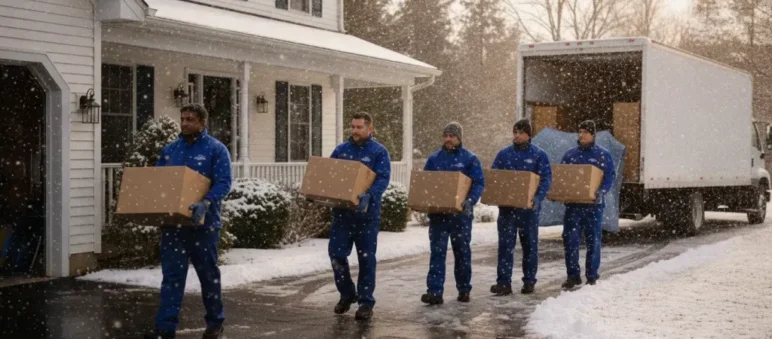
Moving during winter in Delaware can be calm and manageable when your household prepares for cold surfaces, shorter daylight, and changing conditions. The safest plan starts before moving day. Confirm access, protect belongings from moisture, keep utilities ready, and agree on a weather communication plan with your moving team.
Request your free estimate today for a clear plan for your winter move.
This checklist is for homeowners and renters planning a local or longer-distance relocation from northern Delaware. It focuses on practical preparation. It does not promise that weather will remain favorable. Your mover should make the final call about safe travel and loading conditions.
How should you plan moving during winter in Delaware?
Plan your move around safe access rather than a preferred clock time alone. Build in time for clearing snow, drying surfaces, and checking lighting. Confirm the forecast, building rules, parking, utility status, and communication contacts several days ahead. Keep essential items with you in case conditions change.
Start with a written move-day plan. List the origin address, destination address, parking locations, elevator details, and the names of everyone coordinating access. Add a second contact who can answer questions if the primary contact is driving or unavailable.
Ask your mover how the crew handles winter conditions. Useful questions include:
- How will the crew protect floors from wet boots and melting snow?
- What should be cleared before the truck arrives?
- How will the team communicate if ice or poor visibility affects timing?
- Which items should remain with the household instead of entering the truck?
Do not assume a clear morning guarantees a clear afternoon. Temperatures can fall after sunset. Wet pavement can become slick when a move runs late. A realistic schedule leaves room for a careful pace.
What should a moving during winter in Delaware checklist cover?
A useful moving during winter in Delaware checklist covers timing, surfaces, moisture, clothing, utilities, communication, and backup choices. It also separates items that need immediate access from items that can travel in the truck. Review every category with your household and moving team before the final confirmation.
- Timing: Choose a window with enough daylight and flexibility.
- Walkways: Clear snow and ice from the full path to each entrance.
- Moisture: Protect boxes, furniture, floors, and sensitive items from water.
- Clothing: Prepare warm layers that still allow safe lifting and movement.
- Utilities: Confirm heat, electricity, water, and lighting at both homes.
- Communication: Agree on check-in times and the person who can make decisions.
- Contingency: Know what happens if conditions make loading or travel unsafe.
Keep this list easy to reach. A phone note or printed page in a dry folder can help. Do not pack the only copy of your move-day contacts in a box.
How can you prepare walkways and entryways?
Clear and dry access is the first physical safety priority. Remove snow from sidewalks, steps, ramps, driveways, and the path between the truck and each door. Break up ice carefully. Add traction material where appropriate. Keep doors, handrails, and exterior lights usable throughout the move.
Inspect the route from several angles. A thin layer of ice can be difficult to see near shade. Snow pushed to the side can narrow a turn for a dolly. Low branches, planters, hoses, and outdoor decorations can also create trip hazards.
Use a simple access check at both homes:
- Clear a route wide enough for the largest furniture being carried.
- Remove loose rugs, toys, tools, and decorations from the path.
- Turn on porch, garage, hallway, and driveway lighting before arrival.
- Keep a shovel, broom, traction material, and towels nearby.
- Mark any uneven step or narrow turn for the crew during the walk-through.
- Keep children and pets away from the loading path.
Do not create a new hazard while trying to remove another one. Store shovels and bags outside the active route. Follow product directions for any deicer. Use extra care around pets, landscaped areas, and surfaces that can be damaged by salt.
For apartment moves, confirm the building’s winter access procedure. Ask whether staff clears sidewalks, where the truck may wait, and whether an indoor loading area is available. Reserve the elevator and explain that wet-weather protection may take extra time.
How do you protect boxes and furniture from moisture?
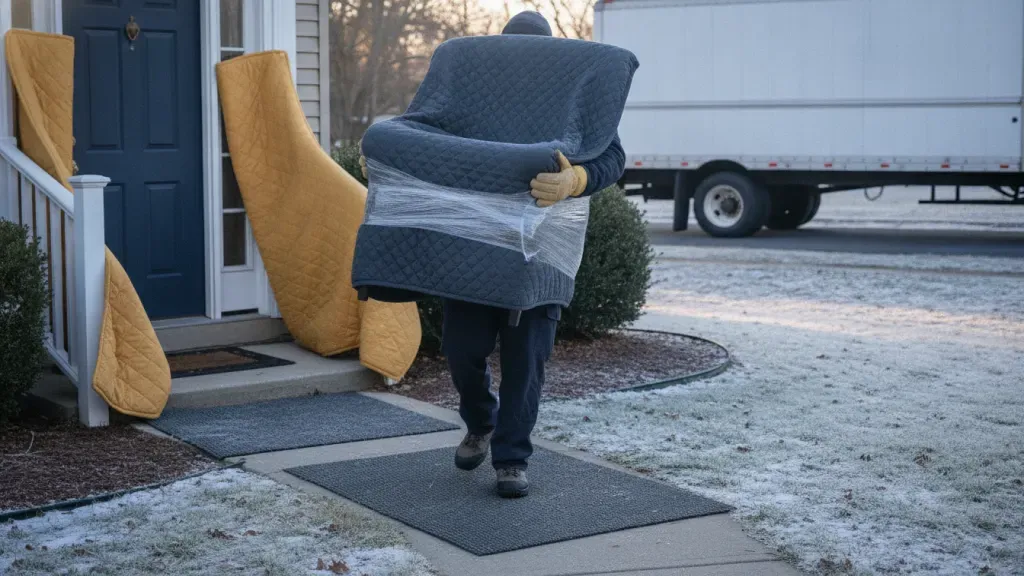
Winter moisture can come from snow, rain, wet pavement, damp gloves, and condensation. Keep cardboard off the ground. Use clean mats at entrances. Cover upholstered furniture and mattresses with suitable protective materials. Let damp items dry before sealing them inside a box.
Pack a small moisture-control kit for the day:
- Clean towels for doorways, handles, and quick wipe-downs.
- Extra plastic bags for wet gloves, boots, and small personal items.
- Water-resistant containers for documents, medicines, and electronics.
- Floor runners or mats approved for the surfaces in each home.
- Labels and markers that remain readable if a box exterior becomes damp.
Do not use loose plastic around items that are already wet. Trapped moisture can cause problems during storage or transit. Dry an item first whenever practical. Ask your mover which protective materials they provide and which household items should be set aside.
| Winter concern | Preparation before the crew arrives | What to keep accessible |
|---|---|---|
| Snow or ice at the entrance | Clear the route, add appropriate traction, and place clean mats inside. | Boots, gloves, a shovel, towels, and move-day contacts. |
| Wet boxes or furniture | Keep cartons off the ground and identify items that need extra protection. | Water-resistant containers for documents, medicines, and electronics. |
| Cold or dark rooms | Confirm heat, electricity, and working lights at both addresses. | Warm layers, flashlights, chargers, and essential supplies. |
| Unsafe changing conditions | Agree on a check-in time and the person who can approve a schedule change. | Phone power, alternate lodging details, and a written contingency plan. |
Pay special attention to fabric, wood, leather, artwork, and electronics. Keep irreplaceable papers, jewelry, medications, and small electronics with you. A moving truck is not the right place for every temperature-sensitive item. Your moving team can help identify handling questions, but the household should retain personal essentials.
If you need temporary storage during the transition, plan the transfer before moving day. Delaware Moving & Storage offers storage solutions for households that need space between addresses. Ask about the best preparation for items entering storage during a damp season.
What should you pack for people and pets?
Pack a winter essentials bag for each person. Keep it in your personal vehicle or another place that will not enter the truck. Include warm layers, dry socks, gloves, a hat, basic toiletries, medications, chargers, snacks, water, and important documents.
Choose clothing that supports safe movement. Bulky coats can make lifting and stair use harder. Wear a warm base layer under a close-fitting jacket. Choose boots with secure traction. Keep loose scarves, long straps, and dangling accessories away from active loading areas.
Prepare a separate kit for children and pets. Familiar snacks, comfort items, and a change of clothes can reduce stress if the schedule changes. Pets should stay in a quiet, secure room or with a trusted caregiver away from open doors and moving equipment.
Set aside items that should not be packed by a moving crew. These may include medications, cash, keys, personal records, food that can spoil, and items needed immediately at the new home. Keep the essentials bag visible and tell everyone where it is.
How should you coordinate heat, lights, and utilities?
Utilities are part of move-day safety. Arrange for heat and electricity to be active at both addresses when the crew arrives. Confirm running water when possible. Test exterior and interior lighting before the move. A warm, lit home is easier to inspect and safer to enter.
At the origin, keep the thermostat at a reasonable setting until the last belongings leave. Cold rooms can make floors and surfaces uncomfortable. At the destination, turn on heat early enough for the home to be usable when the truck arrives.
Check these details before the move:
- Electric service is active at the origin and destination.
- Furnace or other approved heating equipment is operating normally.
- Exterior steps, hallways, garages, and entrances have working lights.
- Water is available for handwashing and basic cleanup.
- Smoke and carbon monoxide alarms are installed and working.
- Parking areas and access gates are open for the scheduled arrival.
Never use an outdoor heater, grill, or fuel-burning appliance indoors. Do not block vents with boxes. Keep children away from heaters, cords, and equipment. If the home has a utility problem, contact the appropriate provider or property manager before the moving crew arrives.
For a longer relocation, confirm utilities at the new address even if delivery will occur later. If the household will use storage first, keep a small set of warm clothing and personal supplies accessible outside the stored shipment.
What should you confirm with the moving company?
Good communication reduces surprises when winter conditions change. Confirm the date, arrival window, addresses, parking instructions, building requirements, and best phone number. Share access concerns early. Give the crew a clear description of steps, narrow paths, elevators, and any delicate items.
Ask when the team will review conditions before arrival. Ask how a delay or reschedule decision will be communicated. The answer should identify a real person or reliable company channel. Keep your phone charged and turn on notifications during the move window.
Send updated access information if conditions change. A cleared driveway can become blocked by a plow berm. A building may close an entrance after freezing rain. Early notice helps the moving team adjust the plan without rushing at the property.
Use a written inventory for essentials and special handling requests. The list does not need to describe every small item. It should identify anything with unusual size, fragile construction, temperature concerns, or access requirements.
Delaware Moving & Storage has served the tri-state area from northern Delaware for more than 42 years. Its team can discuss local, long-distance, apartment, packing, and storage needs during the estimate process. The company is also an official Wheaton World Wide Moving agent, which supports interstate planning through a broader network.
Explore packing services if winter moisture or a tight schedule makes self-packing difficult.
How can you build a winter moving-day contingency plan?
A contingency plan names the conditions that require a slower start, a pause, or a new date. It also protects the household from making a rushed decision. Review the plan with your mover. Follow the mover’s safety direction when road, driveway, or loading conditions become hazardous.
Use this decision sequence:
- Check: Review current conditions, access, visibility, and the forecast.
- Communicate: Contact the moving team before the arrival window if access is unsafe.
- Protect: Keep people, pets, and essential belongings in a safe area.
- Adjust: Allow a later start, a slower loading pace, or a new date when needed.
- Document: Confirm any schedule or access change in writing.
Do not treat a delayed move as a failed move. A careful change can protect people and belongings. The right contingency may be as simple as clearing a route again or waiting for better visibility. It may also require rescheduling if safe access cannot be created.
Keep an overnight plan available if the move spans multiple days. Set aside medications, warm clothes, chargers, food, pet supplies, and documents. Confirm where the household can sleep if the destination is not ready.
The National Weather Service winter safety guidance recommends preparing for cold-weather hazards and monitoring changing conditions. Use official forecasts for decisions. Do not rely on a single weather app notification or an old forecast.
What should you do after the truck leaves?
Complete a careful walk-through at both homes. Check rooms, closets, cabinets, garages, porches, and outdoor areas. Look for items left behind, moisture near entrances, and damage to surfaces that should be documented. Keep photographs and notes with your move records.
At the destination, place floor protection before unloading begins. Direct boxes to the correct rooms when possible. Keep an accessible area for the essentials bag. Remove wet outer layers before handling sensitive belongings.
Once the last box is inside, check that doors close, heat is working, and pathways remain clear. Break down wet cardboard only after it is safe to do so. Keep receipts, inventories, and estimate documents together in a dry location.
Frequently asked questions about moving during winter in Delaware
Is winter a safe time to move in Delaware?
Winter can be a safe time to move when access is clear and conditions are suitable. Safety depends on surfaces, visibility, temperature, utilities, and road conditions. Your moving team should review the plan and communicate if conditions require a slower start or a schedule change.
How can I keep boxes dry during a winter move?
Keep boxes off wet ground and use clean mats at entryways. Cover furniture with suitable protective materials. Dry wet items before sealing them. Keep documents, medications, electronics, and other essentials in water-resistant containers that stay with you.
What should I wear on moving day?
Wear warm layers that allow comfortable movement. Choose secure footwear with good traction. Keep gloves, a hat, and dry socks available. Avoid loose clothing, long accessories, and anything that could catch on furniture, doors, or moving equipment.
Should utilities be on before the movers arrive?
Yes. Heat, electricity, and lighting should be active at both homes when possible. Working utilities help everyone inspect paths and handle belongings safely. Confirm the service status with the provider or property manager before moving day.
What if snow or ice makes the move unsafe?
Contact the moving team as early as possible. Do not ask a crew to use an unsafe route or rush through hazardous conditions. The appropriate plan may involve additional clearing, a later start, or rescheduling. Confirm any change in writing.
How far ahead should I plan a winter move?
Start as early as your housing timeline allows. Early planning gives you time to compare services, arrange access, prepare utilities, gather packing materials, and build a weather backup. Your mover can recommend the next steps after reviewing the addresses and move details.
Schedule your moving estimate to discuss a safer winter relocation plan with Delaware Moving & Storage.