Portable storage Delaware searches often begin with a simple question: should a container come to your home, or should your belongings go to a storage facility? The right answer depends on access, timing, labor, driveway space, protection, and who manages delivery. Drew Hopkins, General Manager, recommends comparing the complete plan rather than choosing by storage format alone.
Request a free estimate to compare your moving and storage options.
What is portable storage delaware and how does it work?
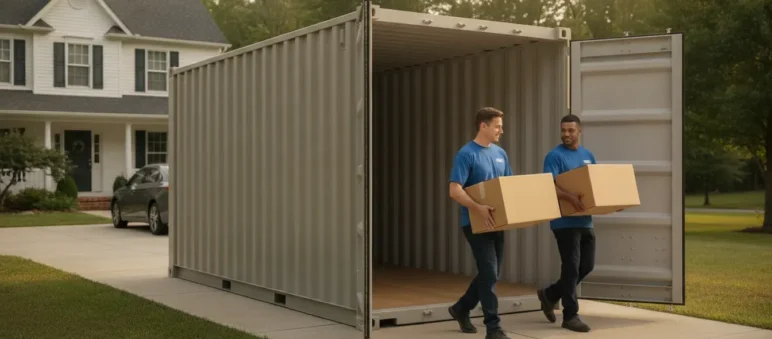
Portable storage brings a container to your home or another approved location. You load the container on your schedule, then keep it on-site or arrange for the provider to move it to another location or facility. Delivery rules, loading responsibility, access, protection, and retrieval terms vary by provider.
A portable storage arrangement usually has three stages. First, a provider delivers a container to a suitable location. Next, you pack and load your belongings. Finally, the container stays at the property or moves to a storage yard or destination.
This model can reduce repeated trips to a self-storage facility. It can also give you more time to load than a single moving-day appointment. The tradeoff is that you may be responsible for packing, lifting, loading, protecting, and organizing the contents.
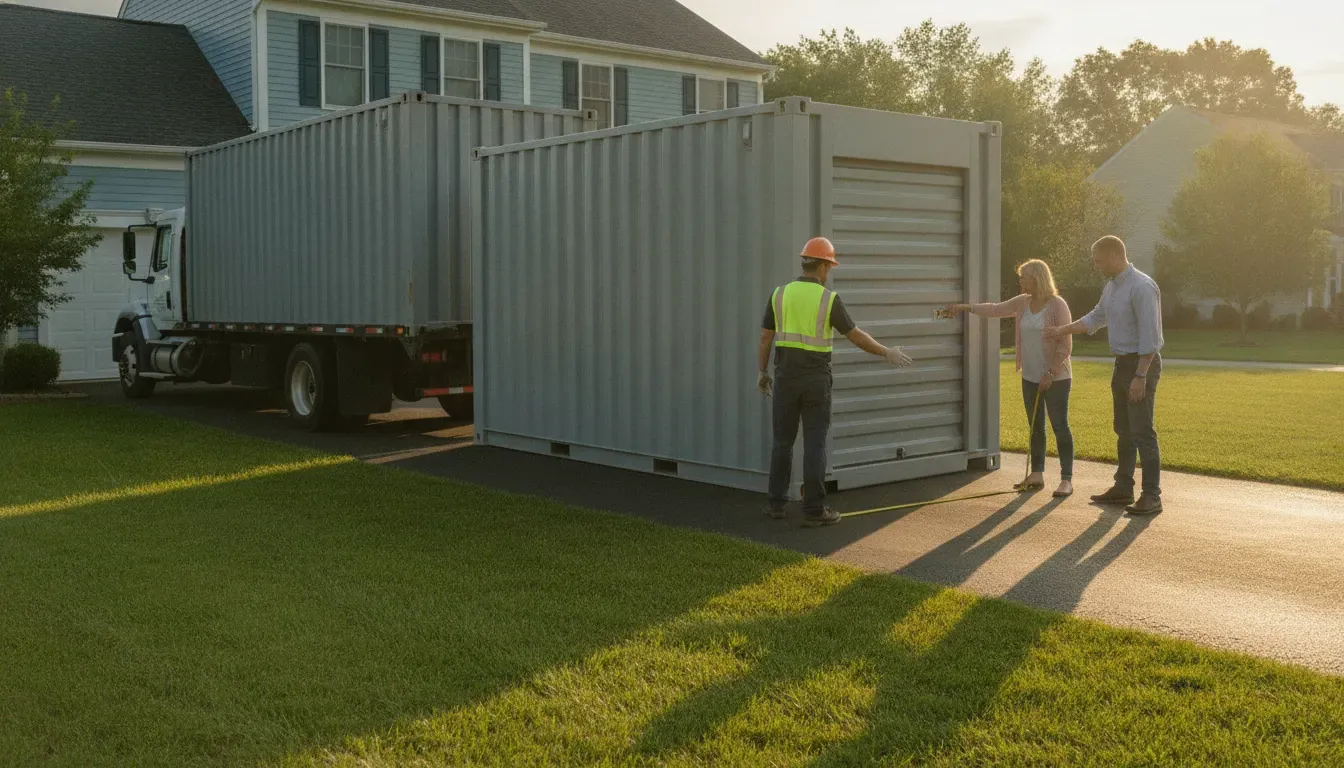
Before reserving a container, confirm the provider’s current service area in Delaware. Ask whether the container can fit on your driveway, whether a street placement needs approval, and how delivery access will be scheduled. Also ask how much space the delivery vehicle needs to place or retrieve it.
Delaware Moving & Storage’s website currently identifies the company as a local COWs Container on Wheels dealer. Current availability, delivery territory, container placement, and terms should still be confirmed before you make a reservation.
How does portable storage delaware compare with facility storage?
Portable storage gives you delivery-based convenience and loading control. Facility storage gives you a managed storage location and a more established retrieval process. Full-service storage adds professional loading and handling. Compare access, labor, protection, timing, delivery, and retrieval instead of comparing space alone.
| Factor | Portable storage | Facility storage | Full-service moving with storage |
|---|---|---|---|
| Where items go | A container comes to your property or an approved location. | Items go to a storage facility or warehouse. | A moving crew loads items for managed storage and later delivery. |
| Who loads | You usually pack and load the container. | You or a moving crew transports and loads the unit. | Professional movers handle loading and unloading. |
| Access | Access depends on whether the container stays on-site. | Access follows the facility’s hours and policies. | Retrieval is coordinated with the provider. |
| Best strength | Flexible loading at the property. | Organized storage away from the home. | Less physical labor and fewer logistics to manage. |
Facility storage may be a better fit when you cannot keep a container on your property. It may also suit a household that wants stored items out of the way during a renovation, sale, or home transition.
Delaware Moving & Storage provides facility storage for temporary and long-term needs. Its published storage information describes more than 40,000 square feet of warehouse and office space. It also lists 24-foot clearance, five loading docks, a Class A rating, and a 24-hour central alarm system. Review the Delaware storage facilities and storage solutions page for service details.
The existing containerized storage versus self-storage guide explains the difference between managed warehouse storage and independent unit access. Use it when your main question is how facility control compares with self-storage access.
When does portable storage delaware fit a move?
Portable storage can fit a move when you need a flexible loading window and have a safe placement area. It is less suitable when your property has limited access, strict placement rules, no room for a container, or a need for professional packing and lifting.
Portable storage may work well in several situations:
- A phased move: You can load belongings over several days while preparing a new home.
- A renovation: Furniture can leave rooms before work begins, if the container can be placed safely.
- A delayed closing: A container may provide a temporary holding option while dates change.
- A self-managed move: You want to control packing order and loading pace.
- A small transition: You need space for selected rooms rather than a complete household move.
Portable storage may be a poor fit when the driveway is narrow, the property has steep access, or the container would block required entrances. It may also create more work than expected for large furniture, fragile items, appliances, and heavy boxes.
Ask yourself how often you need to retrieve individual items. On-site access may be convenient, but it can become less convenient once the container moves to an off-site facility. Ask about appointment windows, retrieval notice, partial access, and redelivery charges before signing.
If you need the least physical involvement, compare portable storage with a full-service moving and storage plan. A professional crew can handle loading, furniture protection, inventory, transport, and placement. The right option depends on the home, the shipment, and your preferred level of control.
Talk with a moving professional about the right storage plan.
What should you ask about delivery and placement?
Delivery questions protect your timeline before the container arrives. Confirm the placement surface, required clearance, delivery window, weather policy, access route, and removal process. Ask who is responsible if the container cannot be placed safely or if your move date changes.
Use this delivery checklist:
- Where exactly will the container be placed?
- How much driveway width, height, and straight access does the delivery vehicle need?
- Can the provider place the container on a street or only on private property?
- Who checks for low branches, overhead wires, gates, slopes, and soft ground?
- What happens if weather prevents delivery or pickup?
- How far in advance must you schedule removal or relocation?
- Can the container stay on-site during a delayed closing?
Take clear measurements and photographs before delivery. Keep doors, walkways, utility access, and emergency routes clear. Do not assume a location works because a smaller truck reached it previously. Container dimensions and delivery equipment can change the access requirement.
For an apartment, condominium, or managed community, ask the property manager about placement rules. Confirm loading-zone reservations, elevator windows, insurance requirements, and any restrictions on container storage.
How should you plan loading, access, and protection?
Loading quality affects both protection and how much space you use. Build a packing order, use sturdy materials, protect furniture, distribute weight, and leave an access path when possible. Confirm what the provider excludes from storage and how damage claims are handled.
Start with an inventory. Group items by room and by how soon you may need them. Place rarely used items toward the back. Keep documents, medication, basic clothing, tools, and household essentials easy to reach.
Use suitable boxes and close each box securely. Wrap furniture and pad corners. Keep heavy items low and distribute weight across the container. Do not lean unstable stacks against the door. Leave space around items that need ventilation or special handling.
Ask about prohibited items before loading. Providers may have rules for perishables, flammable materials, batteries, plants, liquids, valuables, or other restricted goods. Ask whether climate control is available and whether it applies to on-site or off-site storage.
Protection terms deserve a separate conversation. Ask what the provider covers, what you must insure, how claims are filed, and whether loading by the customer changes responsibility. If you prefer professional packing, Delaware Moving & Storage offers packing services and professional materials as part of its broader moving support.

Which storage option fits your timeline and labor preference?
Choose the option that matches your schedule, property, access needs, and willingness to do the physical work. Portable storage prioritizes flexible loading. Facility storage prioritizes managed space. Full-service moving prioritizes professional labor and coordinated handling.
Choose portable storage when you have a suitable placement area and want to load at your own pace. Confirm delivery and retrieval terms before you count on it for a closing date.
Choose facility storage when you need belongings off-site or expect a provider to coordinate warehouse handling. Ask about access, retrieval timing, protection, and the steps required to receive selected items.
Choose full-service moving with storage when lifting, packing, transport, or coordination would create too much stress. A physical or virtual survey can help define the shipment and produce a detailed estimate without relying on a blind guess.
The broad moving and storage guide for Delaware covers how these services can work together. A professional estimate can then narrow the choices to your home, belongings, dates, and service area.
Compare your storage choices before you commit to a delivery schedule.
What are common portable storage questions?
The most useful questions cover placement, loading, access, protection, and timing. Portable storage is not one uniform service. Terms can differ based on the provider, the container location, the move distance, and whether the container remains on-site.
Is portable storage the same as self-storage?
No. Portable storage brings a container to you. Self-storage requires you to travel to a rented unit. Portable storage can reduce trips, while self-storage may offer more predictable independent access.
Can I keep a portable container at my home?
That depends on the provider, property, placement surface, local rules, and delivery access. Confirm the allowed location and the full delivery and pickup requirements before reserving.
Who loads a portable storage container?
Many portable storage arrangements expect the customer to pack and load the container. Ask whether professional loading is available and how loading affects protection or responsibility.
Is facility storage better for a delayed move?
It can be, especially when a container cannot stay at the property or you want belongings managed away from the home. Compare retrieval timing, access, handling, and estimate details.
How do I compare portable storage with a moving company?
Compare the complete job. Include delivery, loading, packing, transport, storage, protection, access, redelivery, and destination placement. A lower space cost may not reflect the labor and logistics you will supply.